Looking for relief
in our own virtue, firmness and unanimity

At eleven o’clock the night of April 21, 1775, five men met at the corner of Broad and Meeting and entered the State House. They passed the court room, jury room, and the housekeeper’s apartment, climbed past the legislative chambers on the second floor, and forced open the door to the attic on the third, a vast room storing the king’s firearms and ammunition. Over the next three hours, they carried eight hundred muskets and bayonets and two hundred cutlasses, along with matches and flints, down three flights to waiting carts and hiding places.
About the same time two other parties rowed from Gadsden’s wharf to the powder houses on Hobcaw and the Neck. They stole one hundred twenty-five pounds of powder from one and five hundred from the other.
For months Charleston had been in a state of anxious anticipation, waiting for Parliament’s reaction to American demands and resolutions, sent to London at the end of 1774. Parliament met in February. Would grievances be redressed or ignored or worse? News came monthly on packet boats, carrying rumors.
The South-Carolina Gazette reported March 13, 1775, that the Eagle landed, with “no certain accounts,” except that the debate in Parliament appeared “in favour of a question unfavourable to us … we have no reason to look for relief, but in our own virtue, firmness and unanimity.”
A few days later, a Charleston merchant returned from England with furniture and two thoroughbred horses he had bought for personal use. According to the South-Carolina Gazette of March 27, thirty-three members of the General Committee ruled they could land, despite the nonimportation agreement signed in Philadelphia. The next morning, “a great Number of the Inhabitants appeared extremely uneasy,” fearing that the committee’s action signaled “an inclination to depart from the Association.” Peter Timothy reported, “their Zeal for the Reputation for their Country threw them into great Agitation.” That agitation extended to threatening to kill the horses.
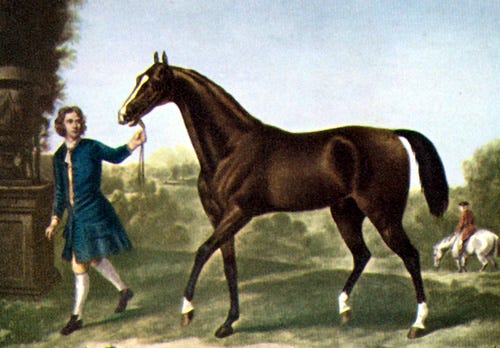
Friday morning the protesters presented a petition signed by 256 people. Because only “a small Majority” carried the decision, the petition asked for it to be reconsidered in a “full committee” in order to “quiet the Minds of the People.” “Many Persons who have the liberty of America at Heart, think it is an Infringement of the Association entered into by the General Congress.”
On Monday, a sixty-nine member committee voted to reverse the decision, 35 to 34. Despite the narrowness of the victory, one participant wrote in his Memoirs: “This is the first instance of a point of importance and controversy being carried against those by whose opinions the people had been long governed.”
The significance of the vote was not lost on Lt. Gov. William Bull either. Had the Inhabitants lost, the merchants “would have considered it a Recession of the Non-Importation Article and immediately sent to England for goods as usual. The example would probably have been followed by New York and the other Colonies.”
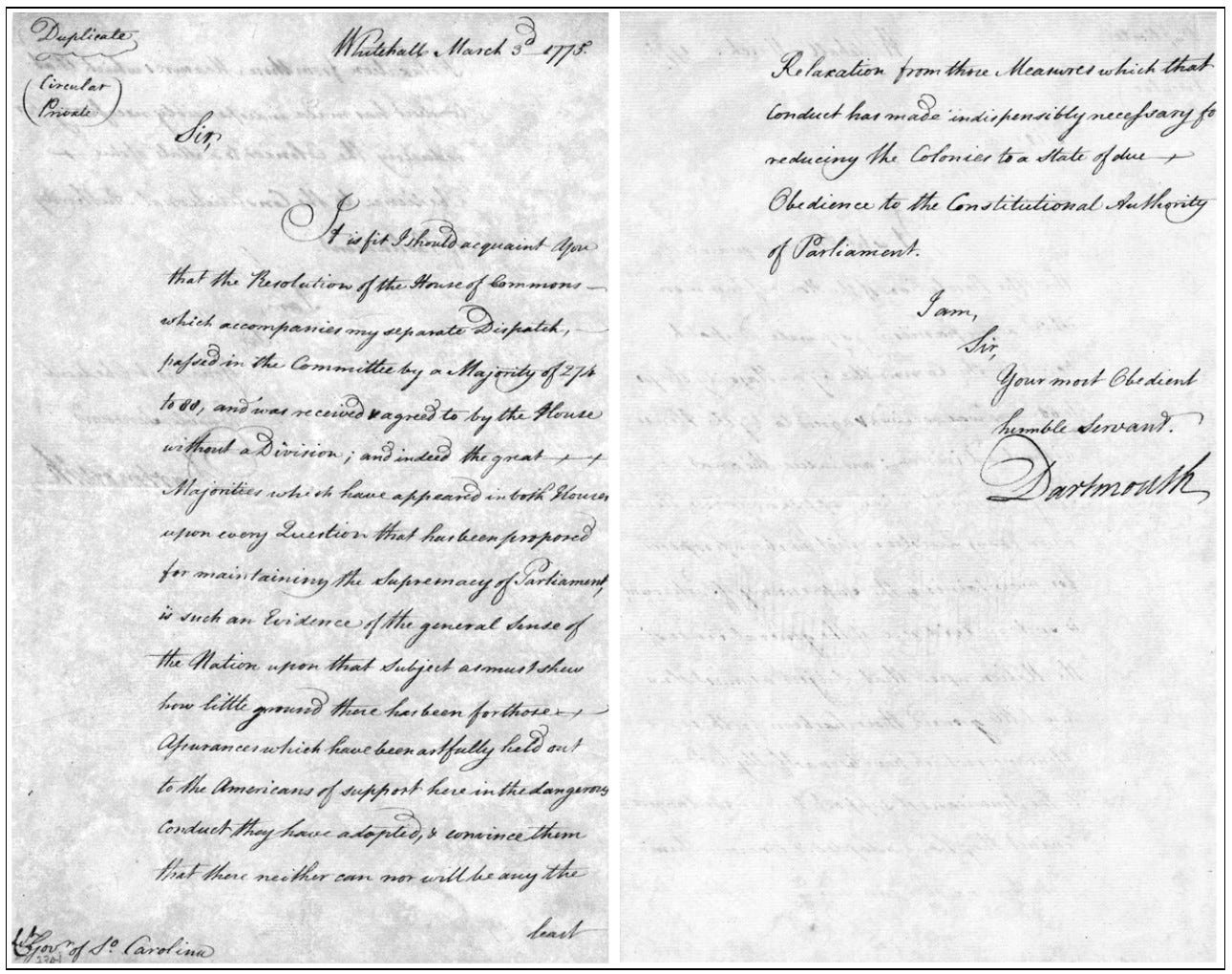
A month later, April 14, the packet Swallow landed with news confirming the rebels’ worst fears—that Parliament called for new troops and warships to enforce and extend the Coercive Acts. At the General Committee meeting April 20 to consider its response, Timothy, secretary to the committee, reported that merchants at a London tavern opened a subscription “for the relief of the Americans and in less than half an hour 15,000 Sterling was subscribed and that other subscriptions were also opened for the same purpose.” During the committee meeting “three gentlemen” broke off and intercepted the royal mail from a second packet, looking for Lord Dartmouth’s letter to the governor. What they found infuriated them. Dartmouth wrote: “there neither can be nor will be any relaxation of those measures … indispensably necessary for the reducing the colonies to a state of due Obedience to the Constitutional Authority of the Parliament.”
The next night, members of the secret committee raided the stores of weaponry and ammunition in the State House attic and the two powder houses, to deprive the British troops of access and squirrel it away for defense. Unknown to the South Carolina rebels, two days earlier Massachusetts patriots had also mobilized, in their case to move heavy artillery they had been spiriting out of Boston. They clashed with British soldiers in Lexington and Concord, with fatal results.
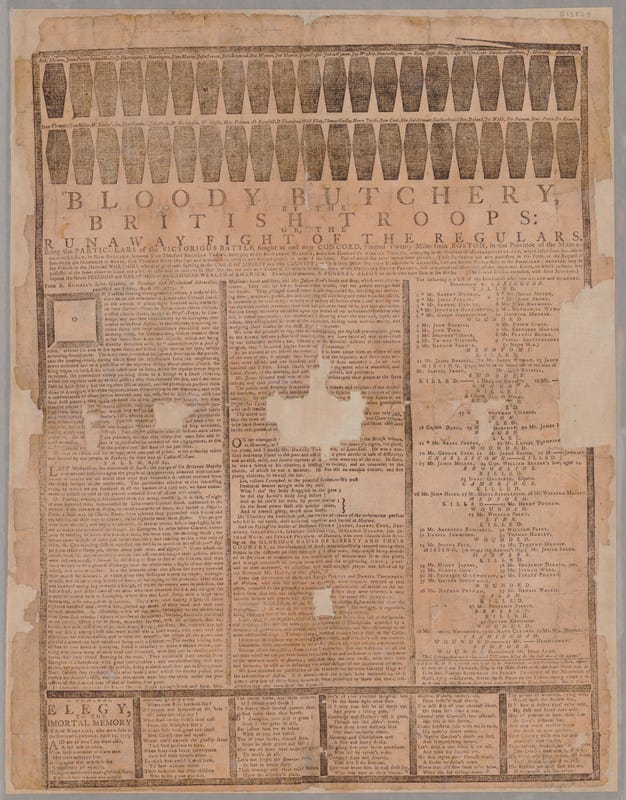
Nineteen days later, on May 8, word of the American casualties in the north reached South Carolina via a newspaper account carried by the brigantine Industry from Salem. In June, the Provincial Congress voted to raise a militia of 1500 men, allocate £1 million to defense, and appoint a Council of Safety with unlimited power.
The measures passed with a “slim majority.”
Long ago I wrote and presented a monograph on the activities of New Hampshire's Sons of Liberty, who in December, 1774, captured Portsmouth's chief defense and cleaned out its gunpowder store. Fascinating to read of the parallel activities in South Carolina.
Such beautiful handwriting, how could anyone resist?