Not to flinch a single Inch
The redemption of the South Carolina Radicals

In early December of 1769 the South Carolina Commons House of Assembly voted to send £1,500 to the London society for the defense of democracy, justice, and the rule of law and the financial and moral support of John Wilkes, a proponent of and martyr to those principles. That decision touched off a struggle that pitted the Commons against the power of the Crown and ended only when the shots fired at Lexington made the whole thing moot.
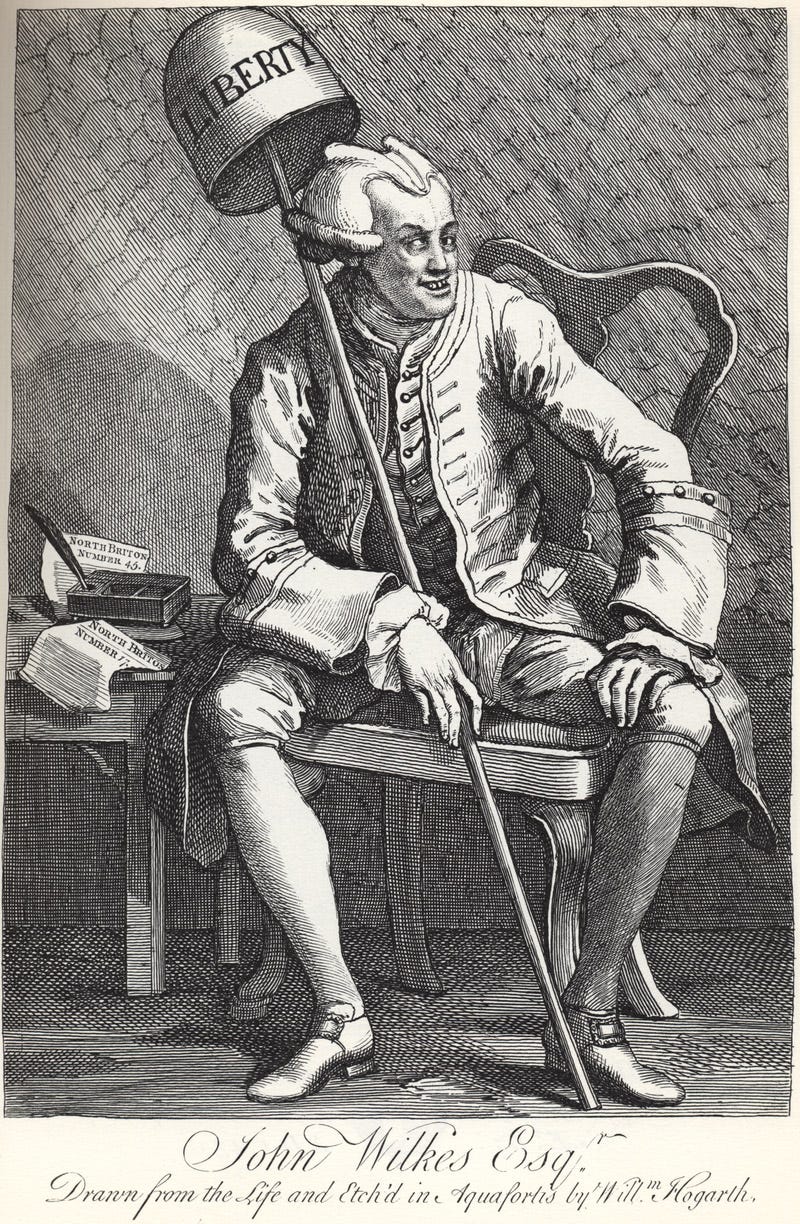
Wilkes had been in the ministry’s crosshairs since 1763 for publishing an essay criticizing George III. He was a hero of the free press, and the more trouble he got into the more press he got. He was a household name, the darling of democratic activists on both sides of the Atlantic.
The South-Carolina Gazette’s coverage of his speeches and trials and the rallies and riots of his supporters helped inspire Charleston’s resistance to the Stamp Act. The Gazette introduced Wilkes on July 4, 1763 in a round-up of London news: “John Wilkes, Esq; member of parliament of Aylsbury, is said to have been committed to the Tower, and the Printer of a paper called the North-Briton to Newgate, on account of the writing, printing and publishing of some particular member of that paper … .”
The Gazette went on to print thousands of words about Wilkes in every issue in July and August that year, sometimes taking up a full page or more of the four-page newspaper. On July 23 it published in full the essay from North-Briton #45 that landed Wilkes in the Tower. In it, Wilkes charged that the Treaty of Paris had sold out Britain. To criticize the king was sedition, but Wilkes argued in court that he had directed his ire at the ministers, not King George. Clearly the effect was to make a dupe of His Majesty:
“Every friend of his country must lament that a prince of so many great and amiable qualities, whom England truly reveres, can be brought to give the sanction of his sacred name to the most odious measures and to the most unjustifiable, public declarations, from a throne ever renowned for truth, honour, and unsullied virtue.”
On July 30 the Gazette printed 4,600 words about Wilkes, leading with Article 29 of the Magna Carta, in Latin, followed by the English:
“The body of a free man is not to be arrested, or imprisoned, or disseised, or outlawed, or exiled, or in any way ruined, nor is the king to go against him or send forcibly against him, except by judgment of his peers or by the law of the land.”
The day-by-day record followed: the issue of the general warrant, the search and arrest, the pleas of the lawyers, the responses of the court, the travels back and forth between Tower and court, and the speech Wilkes made when he was released.
In the August 6 Gazette, readers learned that a brisk business in London had been made selling copies of the Magna Carta printed by Wilkes, one hawker having sold out of 500 copies. When accused of having loud, disreputable followers, Wilkes had responded: "It is not the clamours of a rabble, my lord, but the voice of liberty, which must and shall be heard.” Close coverage continued the next two years, and in1765, Wilkes news complemented reports of resistance to the Stamp Act, in which protests throughout the colonies incorporated the number 45, which stood for solidarity with Wilkes and for democracy and constitutional rights.
On October 3, 1768, the Gazette described a meeting at Liberty Tree:
“the tree was decorated with 45 lights, and 45 sky-rockets were fired. About 8 o’clock, the whole company, preceded by 45 of their number, carrying as many lights, marched in regular procession to town, down King-street and Broad-street, to Mr. Robert Dillon’s tavern; where the 45 lights being placed upon the table, with 45 bowls of punch, 45 bottles of wine, and 92 glasses, they spent a few hours in a new round of toasts, among which, scarce a celebrated patriot of Britain or America was omitted.”
The same thing was happening in all the North American ports: the reverence for the number 45 (Wilkes) and the number 92 (the Massachusetts non-rescinders). Those numbers unified the colonies in a way that slogans struggled to match, and they were spread by newspapers, letters, and word of mouth. But mainly by newspapers. But also by merch:
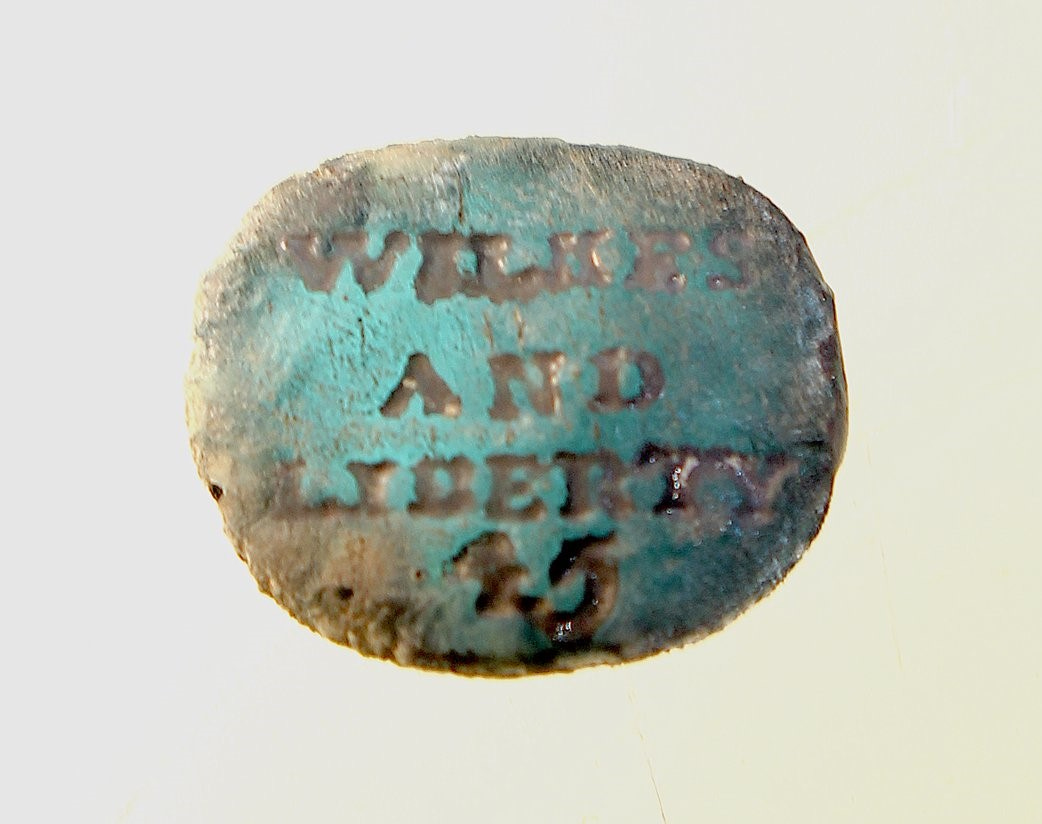
News that South Carolina was sending money to Wilkes reached London in January of 1770. On February 2, the government’s attorney general declared the grant illegal, and in April the London Board of Trade instructed Lt. Gov. William Bull to kill any tax bill that included money for Wilkes.
Before word of “the Instruction” reached Charleston, the front page of the Gazette, on April 12, 1770, chronicled messages flying between the Commons House and the upper house, the Council, made up of royal appointees:
>On Friday the 6th, the Council warned the Commons that it would clear no tax bill that included reimbursing the treasurer for the money sent to Wilkes.
>Saturday the Commons called the Council’s message “most injurious to the Honor of the House” and returned it for “calm and serious Re-consideration.” The upper house sent it back the same day, ordering “that you see our Sentiments; to which we are determined firmly to adhere.”
>Monday the Commons appointed a committee to recommend next steps.
>Tuesday the committee produced ten Resolutions. Among them: “To grant Money, for the Support of the just and constitutional Rights and Liberties of the People of Great-Britain and America, cannot be construed to be disrespectful or affrontive to His Majesty, the great Patron of the Liberty and Rights of all his subjects.”
>On Wednesday the full Commons endorsed the Resolutions, and Bull dissolved the assembly.
On July 5 Charleston raised a statue to democratic hero William Pitt, and the Gazette described another lavish celebration incorporating 45 of this and 92 of that. Of the 45 toasts, the thirty-second was to “Firmness and perseverance in our Resolutions, not to flinch a single Inch.”
The Commons dug in its heels, as did the ministry, and South Carolina functioned without a tax bill, ultimately in 1773 devising a workaround to fund defense of the southern border by issuing debt, which became traded as currency.
Charleston’s patriots had been accused of slavishly following the radicals of the north since the Stamp Act crisis. In a letter to London in 1765 Bull wrote that the Gazette had infected the “minds of men” with “principles … propagated from Boston and Rhode Island.” So when the Gazette reported the news of the £1,500 Wilkes grant on December 8, 1769, Peter Timothy boasted, “In the Instance it cannot be said we have followed the Example of the Northern Colonies.”
In fact, South Carolina far exceeded the efforts of its northern brethren. Boston sent good wishes to Wilkes. Maryland sent 45 hogsheads of tobacco, worth £500. Virginia pledged the same, but not a leaf was sent.
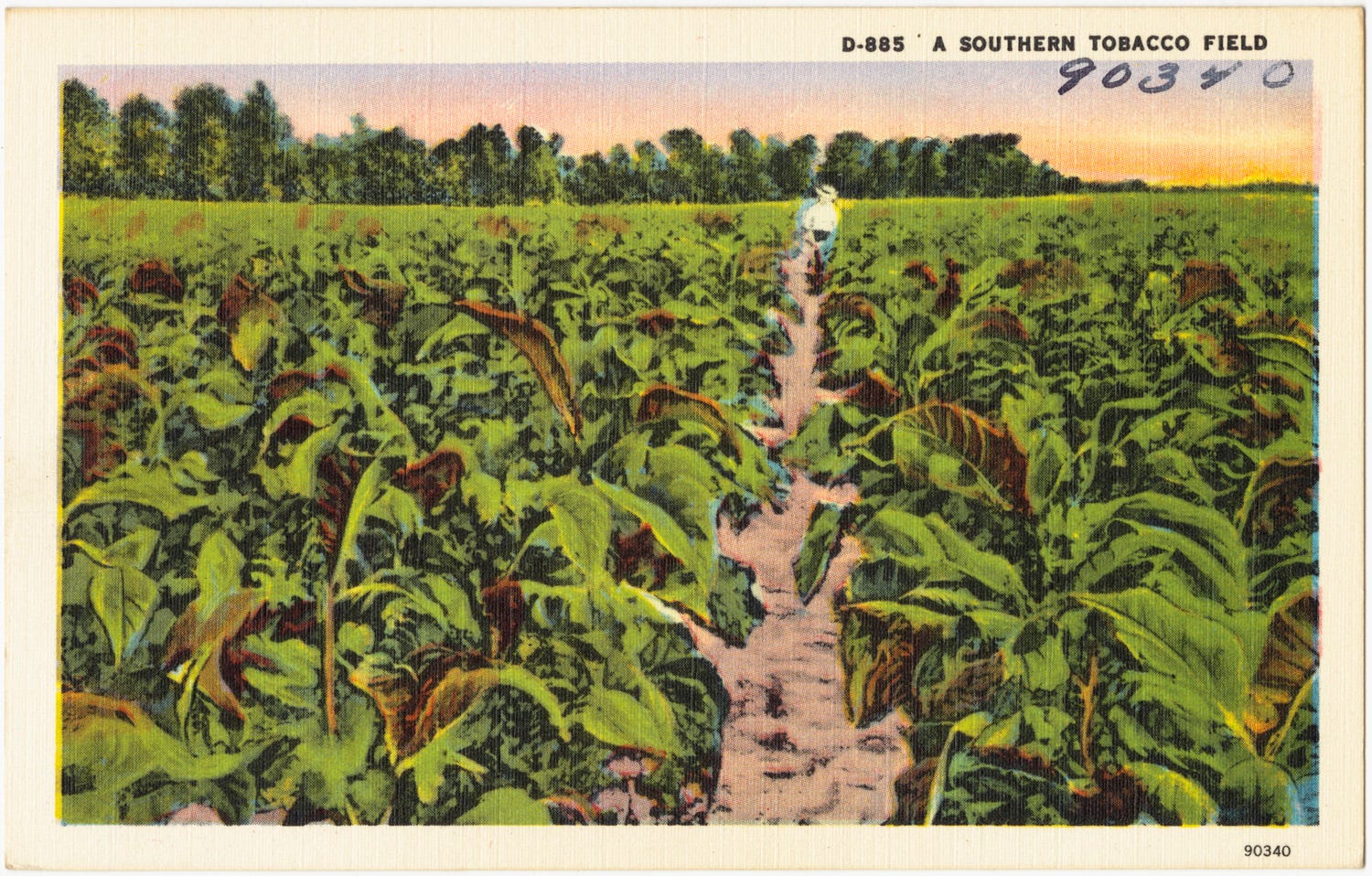
The cufflink and more merch: https://boston1775.blogspot.com/2019/07/a-wilkes-cufflink-from-brunswick-town.html
The number 92 was for the 92 members of the Massachusetts assembly who refused to rescind its circular letter urging the colonies to work together in opposition to the Townshend duties. The Boston Gazette published a story about Charleston Libery Tree meeting copied from the South-Carolina Gazette. All newspapers shared content. https://www.masshist.org/database/466
Charleston Time Machine for Liberty Tree. https://www.ccpl.org/charleston-time-machine/remembering-charlestons-liberty-tree-part-1
The most comprehensive account of the Wilkes crisis: Greene, Jack P. “Bridge to Revolution: The Wilkes Fund Controversy in South Carolina, 1769- 1775.” The Journal of Southern History 29, no. 1 (1963): 19–52. https://doi.org/10.2307/2205100.
All about John Wilkes https://blog.nationalarchives.gov.uk/the-scandalous-case-of-the-north-briton-number-45/
Riveting account. Hard tom believe publishers and editors could be so brave. ...Epic..
Great info and those cufflinks!