Unhappy Accidents: 1739
Heads fix’d on Poles, for a Terror to the rest

The South-Carolina Gazette hit the street on January 4, 1739, five days after the burial of the printer, who died “by an unhappy Accident.” His son Peter Timothy appeared as printer in the same issue that reported his father’s death. He was 13. Elizabeth Timothy, while giving birth to a seventh child and overseeing a household, published the newspaper weekly until September 21. When publication resumed October 13, type at the bottom of a column read:
No Gazettes have been published the three Weeks, past, by Reason of Sickness, (with which I have been attack’d.)
Epidemics burned through Charleston that fall, killing eight to ten people each day, out of population of about two thousand. Two Timothy children were victims. The first was Charles, who had been barely a year old when the family landed in Philadelphia. He died a few weeks after he turned nine, and was buried September 22. A child named Joseph was buried on October 9. He was likely the new baby. White children left in the printing house besides Peter were Mary Elizabeth, 12, who may have been her mother’s understudy, John, 6, Catherine, 4, and Louisa, 2.
As the epidemics raged, the Assembly concluded negotiations with landowners to drain the north branch of the Stono River, about 20 miles southwest of Charleston. Enslaved workers went to work under blazing sun to dig ditches 15 to 20 feet wide and six feet deep, in swarms of mosquitos. They were under the government’s gun to finish before the fall storms, work delayed by the prolonged negotiations.
On Saturday, September 8, after digging from dawn to dusk while the overseer napped under a tree, the workers raided a warehouse for food and drink. They killed two white men there, took their weapons, and headed for St. Augustine, where the Spanish promised freedom. The rebels added to their number as they marched south, and they killed more white people, including entire families. A militia mustered and killed 47 suspected rebels, “some gibbeted and the Heads of others fix’d on Poles in different Parts, for a Terror to the rest,” reported the November 8 Pennsylvania Gazette.
Nobody read about the insurrection in the South-Carolina Gazette. The September 8 issue appeared two weeks before the burial of Charles. The next appeared a few days after the burial of Joseph. It is possible that Elizabeth had been ordered not to print an account, had she been able. The Gazette, like other colonial newspapers, depended on government printing contracts, so it was vulnerable to pressure. Slave revolts were bad for business, and news of the uprising would hamper recruitment of the white settlers needed as a bulwark against the Spanish, the French, and hostile Indians on the frontier, as well as to help correct the racial imbalance—in the low country enslaved Africans outnumbered whites. It would have suited the government to suppress news of Stono.
When the Assembly in November debated a law to tighten controls on the enslaved population in the wake of the revolt, its journal referred to the uprising as that “late unhappy Accident.”
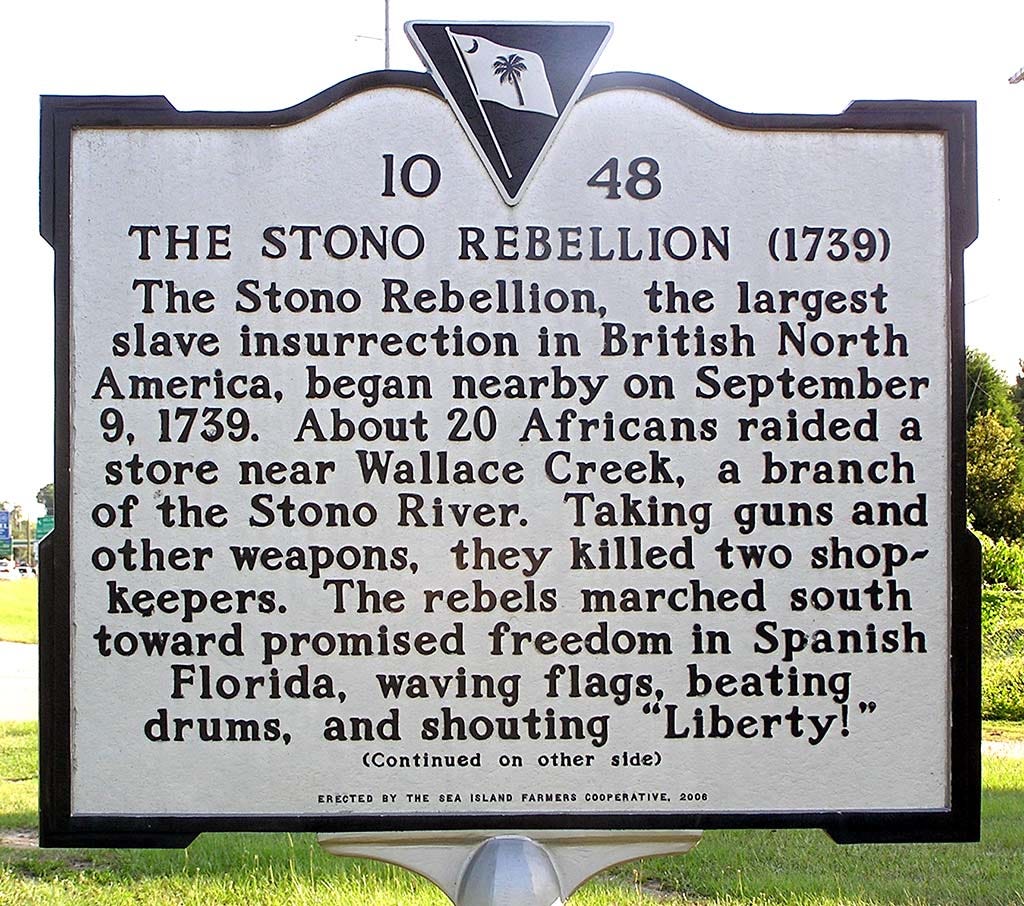
Fascinating. "Unhappy accidents" was quite an understatement!