Venture no more this Way
What happened when the tea reached Charleston

Little came of South Carolina’s nonimportation pledge to favor local manufactures. Indeed, after the repeal of the Townshend Acts in 1770, imports from England quadrupled, and the pages of the South-Carolina Gazette and its rivals filled with advertisements for British goods.
So the mechanics and their allies almost welcomed news that Parliament put a duty on East India tea. It put new fuel behind the resistance to trade with Britain.
“The day is at hand when you may expect a ship to arrive here, with TWO HUNDRED AND SEVENTY CHESTS of TEA,” announced a letter addressed to “My Friends and Countrymen” in the November 29, 1773, Gazette. Paying the three-pence tax would establish “a precedent for subjugating you to future impositions equally unjust and impolitic— and to render assemblies of your representatives totally useless.” The letter, signed Junius Brutus, called for a meeting of “every man … who is a settled inhabitant of this province” to determine “which shall be found necessary to avert the enormous evil, which hangs by a single thread, ready to burst upon your heads.”
Peter Timothy, with apparent zeal, embraced the hot rhetoric that lit the Revolutionary fuse. He may have been Junius Brutus.
A few days later, handbills announced a “General meeting of all inhabitants” for December 3 in the Grand Hall of the Exchange Building. December 6 the Gazette described the meeting in depth, and reported that it reached an agreement to demand that the East India agents refuse the cargo, and participants called for a general no-trade agreement. The same issue mentioned that few days later the merchants formed a Chamber of Commerce to oppose any effort to restrict trade.
At another general meeting on December 17, the planters threw their weight behind the mechanics to overcome the resistance of the merchants. After five hours of heated debate, they decreed that the East India tea aboard the London, at anchor in the harbor for more than two weeks, “ought not to be landed, received, or vended in the Province.”
As the Gazette reported in the December 20 issue, “the great Stumbling Block was, that many Gentlemen in Trade had not desisted from importing Teas Subject to the odious Duty, from the Time it had been imposed, to the very Day of the Importation by the East India Company. All therefore that could be done, was, to shew the most public Disapprobation to the Reception of such Teas, either from the said Company, or our own Merchants.”
But by dragging their feet, the merchants had a victory of sorts. At daybreak on December 22, under the eye of the customs officer, laborers moved 270 chests of tea, each weighing more than 250 pounds, from the London to the cellar of the Exchange. Their value exceeded $1,350,000 in 2023 dollars.
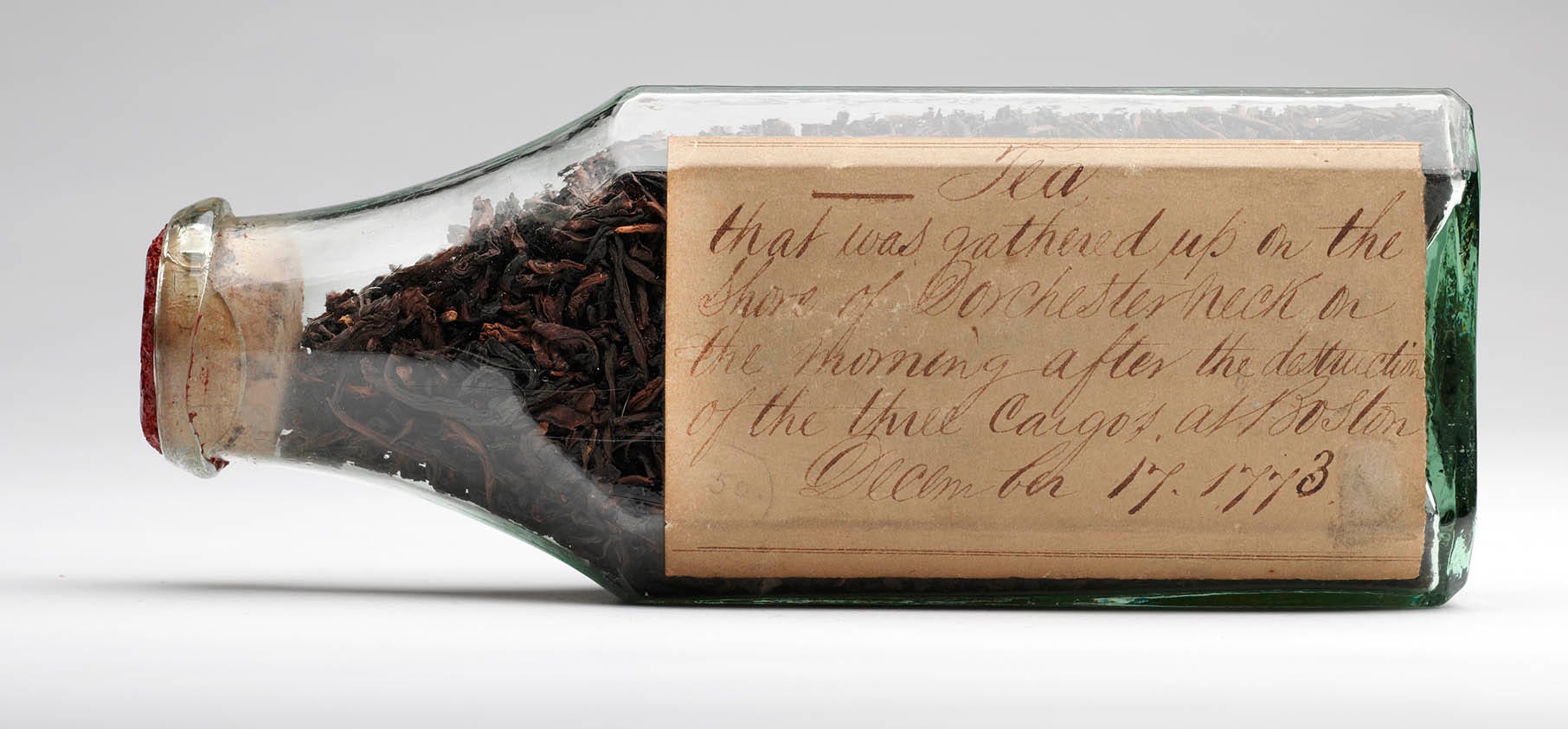
Meanwhile, the Timothy Printing House was running out of paper. Ads in the December issues were printed sideways in the margin. (Apparently a much-anticipated local paper-making operation had failed to materialize.) Readers had to wait a month for the next Gazette, which appeared January 17 with the news that a week before Charleston’s tea was impounded a gang of “Mohawks” had dumped 340 chests into Boston Harbor, worth about $1.7 million.
The January 24 Gazette reported that a General Meeting had nominated fifteen men to “be diligently watchful” and “Use every Means in their Power” to gather “all the Inhabitants of the Town” should there be any attempt to remove the tea stashed under the Exchange.
It also published an extract from the New-York Journal that scolded South Carolina for “sacrificing the grand and important interest of all America to private pique and domestic contention.”
At another General Meeting March 17, the Inhabitants resolved not to buy, sell, or import tea until the Tea-Act was repealed—and to boycott anyone who failed to comply. They appointed a five-person Committee of Observation to enforce the agreement.
In June the committee failed its first test. Another shipment of tea arrived and was impounded under the Exchange before anyone could intervene. But the committee was on the job July 18 and demanded that the captain of a third tea ship either destroy his cargo or take it back to London. In defiance, he allowed his consignment to be stored under the Exchange. Apparently “public Disapprobation” wasn’t much of a deterrent.
Someone was on the watchtower November 1, though, when Captain Samuel Ball anchored the Britannia in the Cooper River with a load of royal appointees and seven chests of East India tea. When called before the committee, Ball produced a testament notarized before he sailed from London that the “mischievous drug” was on board over his objections. The two merchants consigned to sell the tea were called before the committee, and according to the Gazette, “severely declared that they were ready and willing to do any Thing which the Committee should be of the Opinion would most effectually contribute to preserve the Peace and Quiet of the Community.”
The consignees then boarded the ship and “with their own hands … stove the Chests … and emptied their Contents into the River.” The Gazette praised the “Oblation to Neptune.” The same day the Britannia’s tea was dumped, a vessel loaded with 669 pounds of tea was ordered “re-shipped for the Port from whence they were brought, with a Caution to the Shipper to venture no more this Way.”
The report of Captain Ball’s odious cargo and its fate appeared in a Gazette dated November 21, which rounded up three weeks of news.
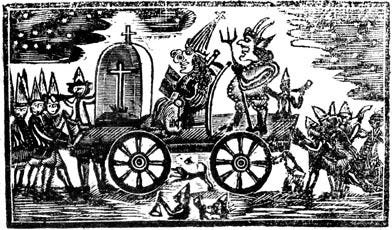
It described an elevated stage eight feet high and fifteen feet long with effigies of Lord North, Governor Hutchinson, the devil and the pope, all with moveable heads, which mechanics and laborers built for the November 5 Guy Fawkes celebration. The devil carried a large lantern in the shape of a tea canister. “The Pope and the Devil were observed frequently to bow, in the most respectful and complaisant manner, to sundry individuals, as if in grateful acknowledgement of their past Services.”
The previous day “Young Gentlemen of the Schools” had gone door to door soliciting tea left in houses and stores. What they collected was “placed between the Devil and Lord NORTH [and] set on Fire, and brought on our Enemies in Effigy that Ruin which they had designed to bring on us in Reality.”
Charleston’s impounded tea stayed in the cellar until 1776, when the nearly formed General Assembly of the State of South Carolina ordered it sold and put the proceeds to the war effort.
Love the hot rhetoric! The oblation to Neptune would be a nice tag line for your History Camp talk
Nice detail on the melodrama.. i can't tell if they are caught up in the politics or having fun. It appeasers both. Do you have a sense the public responded to shaming on this?